HOME INSURANCE · CANADA
How to Make a Home Inventory Before Your Insurance Renewal
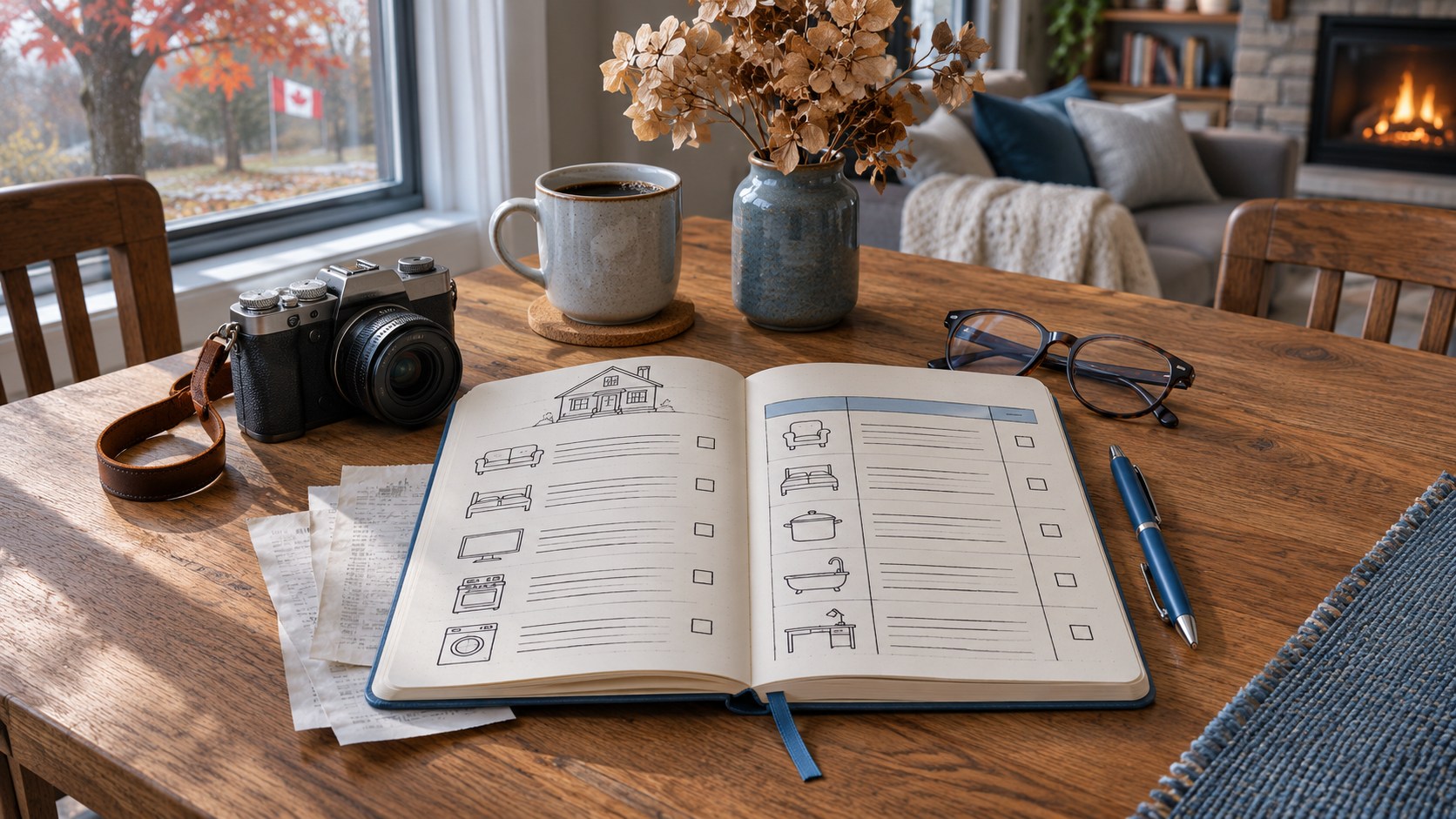
A home inventory helps you do two practical things. It gives you an estimate of what it would cost to replace your belongings and gives you a record to work from if you ever need to describe a loss. Start with one room, record what you see, and bring the questions the exercise raises to your insurance broker before renewal.
The Financial Consumer Agency of Canada recommends keeping a list of belongings, estimated replacement costs, photos and receipts for major purchases. The method below turns that advice into a room-by-room worksheet. It works for tenants, condo owners and homeowners who want to get more out of a renewal conversation. Your policy wording and your insurer's assessment determine what applies to an individual claim. Financial Consumer Agency of Canada home insurance guide
Start with a room, then make a list
Start in the room you use most. Take a few wide photos, then work clockwise from the door so you can tell which areas you have covered. Make one row for each significant item. In a living room, that might mean a sofa, armchair, television, audio equipment and the rug. For ordinary items such as cushions or books, a grouped row with a count can be easier to maintain.
Give every row a location and a name you will recognize later. A stock photo of a television tells you little about the one you own. “Living room, 55-inch television, model on rear label” gives you enough information to find comparable equipment or locate a receipt. Where the label is hard to reach, add a note to check the manual or purchase email later. Keep the walk-through moving.
Once the main room is done, make a second pass for belongings that live out of sight. Open closets and drawers, check the utility room and include the garage, locker or shed in your worksheet if you keep items there. Record the actual location. That detail makes it easier to ask whether your policy treats belongings in different locations differently.
Use a worksheet that separates facts from estimates
A spreadsheet or notebook is enough to start. Give yourself a way to record what you know now and what needs follow-up. These are useful columns:
| Column | What to record |
|---|---|
| Room or storage location | Where the item is normally kept |
| Item and quantity | A description you could recognize a year later |
| Make and model | Details that help identify the item or find a comparable one |
| Purchase date and price | The receipt date and original price when you have them |
| Estimated replacement cost | A current estimate and the date you checked it |
| Evidence | File name or link for a photo, receipt or other record |
| Question for renewal | Anything you want the broker to confirm in the policy |
The last column is where the worksheet becomes part of your renewal review. A bicycle in a locker can be a row with a photo, its model and a current estimate. The question might be whether theft from that locker has particular conditions or limits. A laptop used for freelance work can be a row with the receipt and a note about business use. The question is whether the policy treats it differently from household electronics.
Keep uncertain entries visible. Use “estimated” for a price you have researched and “check” for anything you still need to identify. That makes it possible to come back to the sheet without mistaking an old price, borrowed item or rough guess for a verified fact.
Estimate the cost of replacing comparable belongings
Original purchase price and current replacement cost answer different questions. A dining table you bought on sale several years ago may cost more to replace now. A television might be cheaper to replace with a current model of similar size and features. Record the original cost when you know it, then put the current estimate in its own column.
Look for an item a household could actually buy. If the model has been discontinued, use current examples with similar features and quality. Keep a short note explaining the comparison. A photo of the original item and one or two dated price references can be more useful than a number whose source you no longer remember.
Group ordinary belongings where that will save time without obscuring the total. Try pricing a representative set of cookware, bedding or clothing and noting how many items you grouped. If one item is unusually expensive or hard to replace, give it its own row. The spreadsheet total should tell you what you counted and where substantial estimates still need work.
Ask your broker how the insurer would settle a covered loss under the wording you are reviewing. FCAC distinguishes replacement value from actual cash value, which reflects depreciation. Your worksheet gives you a practical example to discuss. Ask how the policy would handle an older appliance, whether receipts or replacement are required for any part of the settlement, and what limits or deductible would apply to the example. FCAC on home insurance settlement options
Put photos and supporting records somewhere you can find them
Use a consistent photo name or keep a folder for each room. A name such as “office-monitor-model” is easier to recover than a camera sequence you have to scroll through later. For significant items, take an overview photo and save the model or serial number when you can read it safely. A purchase email, receipt or warranty record may contain the same details.
Save receipts with the item name or put a reference to the receipt in the worksheet. You can do this without scanning every sheet of paper in the house. Start with major purchases, specialized equipment and anything you would find difficult to identify from a wide photo. For gifts or older belongings, keep the evidence you actually have and leave the receipt field blank if there is no receipt.
Keep a copy of the inventory somewhere you could reach if your main device or home storage was unavailable. An account you can access independently or an encrypted backup stored elsewhere can serve that purpose. Check the process once with a second device. Make sure you can open both the sheet and at least one of its linked records. A link into a local folder may work on your computer and fail everywhere else.
Inventories can include serial numbers, photos of valuables and details about your home. Limit who can see the files, and use the broker's or insurer's usual secure process if they ask for copies. For renewal, a summary of totals and questions may be enough to start the conversation. Keep the full inventory available for when it is needed.
Bring the exceptions to your broker
The total is a starting point. Items that are unusual for your household, unusually valuable, or kept somewhere other than your main living space deserve their own questions. Ask the broker to show you the relevant wording for jewellery, bicycles, tools, collections, borrowed equipment or items stored off-site if those situations apply to you. Ask whether a separate limit, condition, deductible or endorsement is relevant.
Explain how the item is used and where it is kept. A camera used for family photos and a camera used for paid assignments may raise different questions. Business use is worth identifying explicitly. FCAC notes that home insurance may provide limited protection for business equipment and advises people who operate a home-based business to notify their insurer. Ask how the insurer wants the activity described and what options are available. FCAC on home-based businesses and home insurance
For a condo, note improvements separately from movable belongings. If you have changed the flooring, cabinets or fixtures, keep the invoices or scope of work in a distinct folder. Ask your broker what information they need from the condominium corporation, and how the distinction between building coverage, unit improvements and contents applies to your unit. For a rental, list your own belongings and flag questions about shared property or purchases made by a roommate. FCAC on condo and tenant insurance
Compare two quotes with the same inventory
If you are comparing offers, start with the same description of the property and the same list of questions for each broker. A difference in the premium is easier to understand when you can see whether the quotes use different contents limits, deductibles or settlement terms. Ask for the assumptions behind the quote in writing so you can see what changed.
Try a simple table with columns for each quote and rows for the issues that matter to your household. For instance, list the contents limit, the settlement basis, the deductible for the scenario you discussed and the treatment of the one or two items you flagged. Add a row for questions that still need an answer. Avoid filling blank cells by assuming that both policies use the same wording.
A question about storage illustrates the benefit. Suppose two quotes have the same overall contents limit, but you keep a bicycle in a shared locker. Ask both brokers what the policy says about the locker location and any security or documentation conditions. Compare the answers using the same facts about the bicycle and where it is kept. This gives you a specific difference to weigh even if the overall contents amounts are identical.
Send a short renewal note
You can summarize the worksheet in a few lines. State what changed since last year, give the current rough estimate for the belongings you counted, and list the questions you want to go through. Here is a fictional example:
I’m reviewing our home insurance before renewal. We added a computer and replaced some furniture this year. We keep two bikes in the building’s shared locker, and one laptop is occasionally used for paid work. Could you explain how the proposed policy treats those items, how it settles a covered contents loss and what limits or conditions I should read?
Follow up by writing down the answers, the name or job role of the person you spoke with, and the date. If an answer depends on an endorsement or a change in the quote, ask for the revised documents before you rely on it. Mark pending questions in the same worksheet so they remain visible when you review the paperwork.
Write down your next step as well. Perhaps you need to send a photo of a bicycle lock, confirm the laptop's use, or review a document from the condo corporation. The practical goal is an agreement about what needs checking and who will do it. Later, when your policy changes or you buy new equipment, that record tells you which questions you already answered and which assumptions may need updating.
Keep it current without starting over
Add major purchases as they happen and remove items you have sold, donated or replaced. Keep an older version if it helps explain how the list changed. A move, renovation or change in who lives in the home is a good point to review the locations and uses recorded in the inventory. A new storage locker or a business activity can matter even when the total value of the items has barely changed.
At renewal, check the most expensive items first. Update the estimates that could materially change your total and verify that the backup still opens. Walk through any rooms you skipped the first time. You can give different rooms a review date so you know which parts of the list are recent and which ones are due for another look.
A useful inventory is one you understand and can maintain. A current list of major belongings, a workable set of photos and a few questions tied to actual items are enough to start. If you only have time for one room today, take its photos, write down its largest purchases and add the rest of the rooms to your calendar. When you call your broker, start with what changed in your home and the questions you want the policy documents to answer.